Fiber Optic Contractor Insurance
Insurance built for fiber optic contractors.
Fiber Optic Guard covers the commercial crews that build broadband — directional drilling, aerial installation, and splicing. We insure the contractors who do the work, not the carriers or ISPs that hire them.

Coverage for fiber optic contractors
The core lines a fiber contractor carries — written to the way underground, aerial, and splice work actually operates.
General Liability Insurance
Third-party bodily injury and property damage coverage for fiber optic contractors — open trenches, bores, aerial work, and public-right-of-way exposure.
Learn more →Commercial Property Insurance
Coverage for the shop, yard, and stored materials and reels a fiber contractor operates from.
Learn more →Contractors Equipment Insurance
Inland marine coverage for directional drills, bucket trucks, fusion splicers, locators, and the gear a fiber crew moves between job sites and states.
Learn more →Workers Compensation Insurance
Medical and lost-wage coverage for fiber crews — with honest handling of the four monopolistic state-fund states and the multi-state-payroll reality of traveling crews.
Learn more →Commercial Auto Insurance
Coverage for the trucks, drill rigs, bucket trucks, and trailers a fiber contractor drives across states to follow the work.
Learn more →Pollution Liability Insurance
Coverage for the environmental exposures of underground fiber work — a directional bore striking a gas, sewer, or fuel line, drilling-fluid (bentonite) releases, and frac-outs. A signature directional-drilling exposure.
Learn more →Umbrella Liability Insurance
Excess limits above general liability and commercial auto for larger fiber contracting operations and the higher limits BEAD and prime-contract work often require.
Learn more →Professional Liability Insurance
Errors and omissions coverage for fiber contractors — faulty splice work, network spec/as-built errors, and design-adjacent mistakes that cause a financial loss without physical damage.
Learn more →Three trades, three risk profiles
Drilling, aerial, and splicing carry different exposures. We write each to its own operation — not off one generic contractor form.
Directional Drilling Insurance
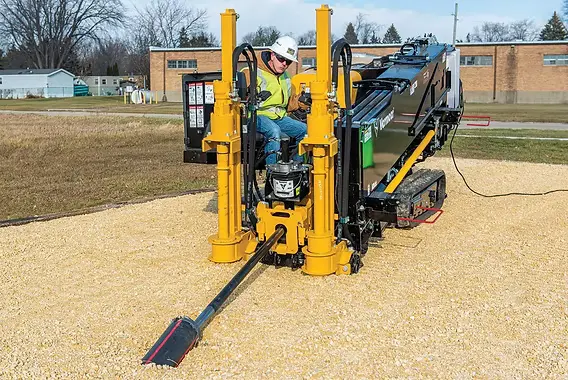
Insurance for horizontal directional drilling (HDD) crews installing fiber underground — the bore/utility-strike, frac-out, and pollution exposures that define underground fiber work.
Learn more →Overhead Fiber Installation Insurance
Insurance for aerial fiber crews installing cable on poles and strand — the height, bucket-truck, pole-attachment, and overhead-electrical exposures of aerial work.
Learn more →Fiber Splicing Insurance
Insurance for fiber splicing crews — the precision fusion-splice work where the signature exposure is professional liability (a bad splice or spec error), not heavy equipment.
Learn more →Built for how fiber crews actually work
A broadband buildout is moving across the country, and the crews chase it. The coverage has to keep up.

One trade, in depth
We write commercial fiber optic contractors — directional drilling, aerial installation, and splicing crews — and place the work with carriers that actually want the class. Not a generalist agency stretching to cover a trade it does not know.
The exposures GL leaves out
A directional bore can strike a gas, sewer, or fuel line; a frac-out can surface drilling fluid where it does not belong; a bad splice can cause a financial loss with no physical damage. Pollution liability and professional liability cover the gaps a standard general liability policy excludes.
Coverage that travels with the crew
Fiber crews follow the work across state lines — a team based in one state running a build three states away. We structure commercial auto, workers compensation, and equipment coverage for multi-state operations, including the four monopolistic comp states, so coverage follows the crew.
Fiber optic contractor insurance guides
Plain-language guides on coverage, cost drivers, multi-state crews, and finding broadband work in the BEAD era.
Licensed in 48 states
We place fiber contractor coverage across the country (every U.S. state except Hawaii & Alaska) — wherever the work takes your crew. Priority states are highlighted.
- Alabama
- Arizona
- Arkansas
- California
- Colorado
- Connecticut
- Delaware
- Florida
- Georgia
- Idaho
- Illinois
- Indiana
- Iowa
- Kansas
- Kentucky
- Louisiana
- Maine
- Maryland
- Massachusetts
- Michigan
- Minnesota
- Mississippi
- Missouri
- Montana
- Nebraska
- Nevada
- New Hampshire
- New Jersey
- New Mexico
- New York
- North Carolina
- North Dakota
- Ohio
- Oklahoma
- Oregon
- Pennsylvania
- Rhode Island
- South Carolina
- South Dakota
- Tennessee
- Texas
- Utah
- Vermont
- Virginia
- Washington
- West Virginia
- Wisconsin
- Wyoming
Fiber optic contractor insurance FAQ
Why do directional drilling crews need pollution liability insurance?
Because a standard general liability policy excludes pollution. Horizontal directional drilling carries real environmental exposure — a bore can strike a gas, sewer, or fuel line, and a frac-out can push drilling fluid (bentonite) to the surface where it does not belong. The cleanup and third-party damage from those events fall outside GL. Pollution liability is the line that responds, which is why underground fiber work specifically needs it.
What does professional liability cover for a fiber contractor?
Professional liability — errors and omissions — responds when your work causes a financial loss without physical damage. A faulty splice, a network that does not test out to spec, or an as-built error can cost a client real money even though nothing was physically destroyed. General liability covers bodily injury and property damage; it does not cover that kind of economic loss. For splicing and spec-driven work, E&O is the coverage that fills the gap.
How does workers compensation work for a crew that travels between states?
Workers comp follows your payroll, so the state your crew is physically working in matters as much as the state you are based in. A team living in one state and running a build in another can trigger coverage requirements in both. We structure comp for multi-state payroll and flag the four monopolistic states — North Dakota, Ohio, Washington, and Wyoming — where private carriers cannot write comp at all and coverage comes only through the state fund.
Does equipment insurance cover a directional drill stolen from a job site?
That is what contractors equipment coverage — inland marine — is built for. Your high-value mobile gear, from directional drills and bucket trucks to fusion splicers and locators, moves between job sites and often sits at remote or unattended locations. Inland marine covers that equipment on the move and at the site, including theft, in a way a standard property policy tied to a fixed address does not.
What insurance do BEAD and prime broadband contracts usually require?
Primes and BEAD subgrantees set their own insurance requirements, but they typically ask for general liability, commercial auto, and workers compensation, often with an umbrella to reach higher limits, plus certificates of insurance naming them as additional insured. The exact limits vary by contract. We help fiber contractors build a program that meets those requirements and turn certificates around so a coverage gap does not cost you a bid.
How much does fiber optic contractor insurance cost?
There is no single price, because premium is driven by your specific operation. The biggest factors are your payroll and crew classifications, your mix of drilling versus aerial versus splicing work, the value of your equipment, how many states you operate in, and your claims history. A splice-focused crew looks very different to an underwriter than a directional drilling operation. We price to the real risk rather than a generic guess.
Who we are
Fiber Optic Guard Insurance is a specialty brand of Wexford Insurance, an independent agency led by Nate Jones, CPCU. We focus on one trade — commercial fiber optic contractors — and place coverage with carriers that actually want the class.
Our fiber optic contractor specialty panel includes 24+ markets we hold appointments with. The 24 carriers actively quoting the class today are: The Hartford, Liberty Mutual, Three Insurance, Crum & Forster Insurance, Lio Specialty Insurance, biBERK, Amerisafe, West Bend Insurance, Secura Insurance, Goodville Mutual Insurance, Kinsale Insurance, BerkleyNet, FrankCrum, Texas Mutual Insurance, Cincinnati Insurance, CNA Insurance, Encova Insurance, GEICO Insurance, Progressive, Hastings Insurance, ICW Group, Markel Insurance, Ohio Mutual Insurance, Lloyd's of London. That active list is reviewed regularly and adjusted when a carrier’s appetite shifts.
Fiber contractors don’t fit a standard contractor policy. A directional drilling crew boring under a highway, an aerial crew working off a bucket, and a splice team on a fusion machine carry completely different risks — and most agents try to write them all off one generic form. We don’t. We built Fiber Optic Guard because these crews travel to follow the work, and the coverage has to travel with them — the pollution exposure on a bore, the E&O on a bad splice, the comp on a crew three states from home.
— Nate Jones, CPCU, Founder
Fiber Optic Guard Insurance is a DBA of Wexford Insurance, LLC. Verify our license — NPN 19887690 — at NIPR.com.
Get a quote for your fiber operation
Tell us about your crew and the work you run, and we will market it to carriers that write the class.